Why Everyone Searches for Free Rental Software First
Every rental operator has typed it: free rental management software. And it's a rational search — margins are tight, the fleet already eats most of the budget, and paying a monthly fee for "admin software" feels like a luxury when a spreadsheet sort of works.
The problem is that "free" in this market comes in several very different packages, and most of them cost you somewhere else: in hours, in lost bookings, in security risk, or in a forced migration a year later. This guide walks through each flavor of free — free plans, open-source platforms, and the trusty spreadsheet — what each genuinely offers, and how to decide when paying is actually the cheaper option.
The Four Flavors of "Free" — and What Each Really Is
1. Free plans (freemium)
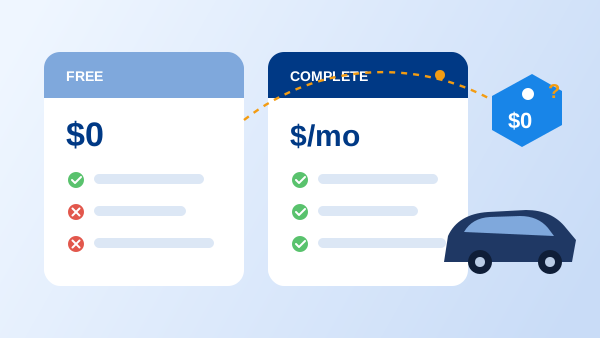
Some booking platforms offer a permanently free tier. Read the limits before celebrating: they're typically capped at a handful of vehicles or bookings per month, strip out the features a rental business actually depends on — online payments, contract generation, multi-user access — and show the vendor's branding to your customers. Free tiers exist to convert you; the moment your business depends on the tool, you're upgrading on their terms.
2. Open-source platforms
Open-source rental systems make the opposite trade: everything is included, nothing is operated for you. You (or a developer you pay) handle the server, SSL certificate, backups, version upgrades, and security patches — indefinitely. When a payment gateway deprecates its API or a security hole is disclosed, fixing it is your job. For an operator whose business is renting cars, not maintaining PHP applications, "free software plus a freelance developer on call" is a subscription with worse response times.
3. Spreadsheets and paper
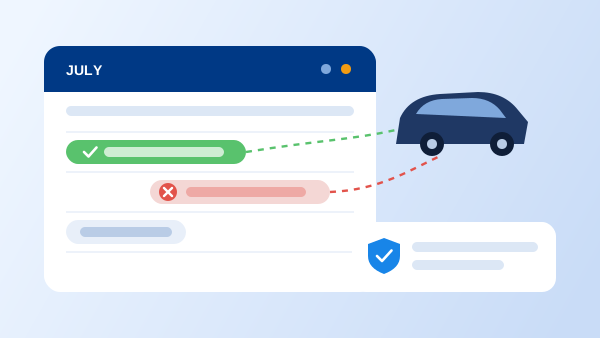
The default starting point, and honestly fine for the first two or three cars. But a spreadsheet has no booking engine — customers can't reserve at 2 a.m. from your website — and no conflict checking, which is why the first double booking is usually what sends operators shopping for software. Add the hours spent re-typing customer details into paper contracts, and the free spreadsheet turns out to bill you weekly in your own time.
4. Free trials of commercial software
The fourth flavor is different in kind: the complete product, free for a limited period. A 14-day free trial costs nothing, requires no credit card, and — unlike a capped free tier — lets you test the workflow you'll actually run: real vehicles, real rates, online reservations, e-signed contracts. It doesn't solve "free forever," but it does solve "don't pay for software you haven't validated."
"Free software is rarely free — it just moves the invoice from the vendor to your own calendar."
Where Free Actually Costs You
Whatever flavor you pick, the costs of a free setup tend to show up in the same four places:
- Missed bookings. No online booking engine means every reservation needs a phone call or email during your working hours. Travelers comparing rental sites at night simply book elsewhere.
- Errors. Manual calendars produce double bookings and forgotten returns; every incident costs a refund, an upgrade, or a review that follows you for years.
- Your hours. Quoting, re-typing customer data, drafting contracts, chasing signatures — admin that software does in seconds, repeated for every rental.
- Risk. Self-hosted systems holding driver's licenses and card details need patching and backups. An unmaintained "free" install is a data breach waiting for a slow week.
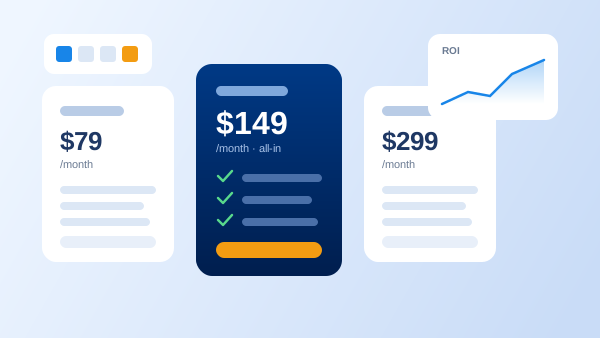
None of these appear on an invoice, which is exactly why free options look cheap. Price them at your hourly rate and your average rental day, and the comparison changes — our car rental software cost guide breaks down what the paid side of the scale actually looks like.
How to Evaluate a "Free" Option in 5 Steps
Before committing your fleet to any zero-dollar tool, run it through this test:
-
1
List the workflow you can't compromise on
Online reservations, availability calendar, contracts with signatures, payments, and basic fleet records. If a free option is missing any of these, it's not an option — it's a partial tool you'll be replacing.
-
2
Find the ceiling
Every free plan has one: vehicles, bookings per month, users, or locations. Check whether your business today — not someday — already exceeds it, and what the paid tier costs once you cross it.
-
3
Price the invisible work
For open source: hosting, setup, and a developer's hourly rate for maintenance. For spreadsheets: your own hours per week at what your time is worth. Write the number down next to "free."
-
4
Check the exit
Can you export your customers, bookings, and vehicle history? Free tools you outgrow are only cheap if your data leaves with you.
-
5
Run a full-featured trial alongside
Put your real fleet and rates into a commercial trial for two weeks and compare the daily routine side by side. The difference in hours is your real price comparison.
What Changes When You Move Off "Free"
Your website starts taking bookings
A real booking engine turns your site from a brochure into a sales channel that works nights, weekends, and holidays — usually the single biggest revenue difference operators notice after switching.
Double bookings stop
One availability calendar, checked automatically on every reservation from every channel. The most expensive spreadsheet failure simply stops happening.
Contracts sign themselves
Customer details flow straight into a rental agreement that's e-signed before or at pickup — no re-typing, no printer, no filing cabinet.
Admin shrinks to minutes
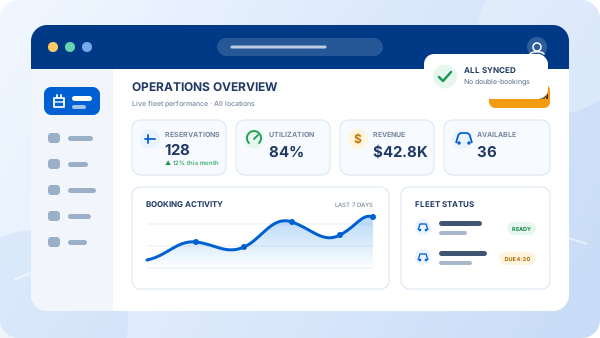
Quotes, confirmations, and fleet records that consumed evenings become a dashboard you check with coffee. Small teams especially feel this — it's why we built a plan specifically for small rental businesses.
Someone else carries the technical risk
Updates, backups, security, and uptime are the vendor's problem, covered by the subscription. Your unpaid weekend sysadmin role is retired.
The Takeaway
Free car rental software is real, but it's never complete: free plans cap the features that make you money, open source trades license fees for maintenance you must staff, and spreadsheets bill you in hours and errors. The honest comparison isn't "free versus paid" — it's "which costs less per month: a subscription, or the bookings and time a free setup loses?" For most operators past their first few cars, a two-week trial of the real thing settles the question with data instead of guesswork.
Frequently Asked Questions
There are free plans and open-source platforms, but none of them are free once you count everything a rental business needs to run: a booking engine on your website, payment processing, contract generation, support, and someone keeping the system updated. Free plans monetize by limiting exactly those features; open source shifts the cost from a license fee to hosting, setup, and maintenance work. Expect to pay in either money or your own hours.
The license is free — running it is not. You need a server, SSL, backups, security patches, and a developer every time something breaks or a payment gateway changes its API. For a rental operator without in-house technical staff, the realistic cost of a self-hosted open-source system is developer hours, and the realistic risk is an unpatched system holding your customers' personal and payment data.
You can start on spreadsheets, and many operators do — until the first double booking. A spreadsheet can't take reservations from your website at 2 a.m., can't stop two employees renting the same car for overlapping dates, and can't generate a signed contract. The spreadsheet is free; the hours spent maintaining it and the bookings lost to errors are not.
A free plan is a permanently limited version of a product — restricted vehicles, bookings, users, or features — designed to push you to upgrade once you depend on it. A free trial gives you the complete product for a limited time so you can test your real workflow: online bookings, contracts, rates, and fleet management. For evaluating software you'll run your business on, a full-featured trial tells you far more than a stripped-down free tier.
As soon as bookings are your income rather than a side activity. One prevented double booking, one weekend of online reservations you would otherwise have missed, or a few hours of admin saved each week typically covers a small operator's monthly subscription. If the software's monthly cost is less than the revenue of one rental day, the free-versus-paid question usually answers itself.