
Trailer rental software runs the same loop as any rental: a booking, a deposit, a signed agreement, the handover and the return. Trailers change the details. There is no engine or odometer, so you charge by time rather than miles. The renter tows with their own vehicle, so the hitch and the tow rating matter as much as the driver's license. And trailers often go out for a week or a month, or come back to a different location. This guide is for owners of small utility, cargo, car hauler and equipment trailer rentals choosing a system. It lists what the software should do, shows the cost with worked numbers, and says plainly where Car Rental Solutions fits and where it does not.
Short answer: trailer rental software should show live availability for each trailer, price by the day, weekend, week or month, take deposits, get the agreement signed, sell add-ons such as ball mounts and straps, handle one-way returns and show which trailers are out or overdue. Expect a monthly subscription, a per-booking fee, or both, plus card processing. Car Rental Solutions supports trailers alongside cars, from $69.95 a month plus a $197 setup fee ($1,036.40 in the first year), with a 14-day free trial and no credit card. Contracts and e-signatures start with Option B. It has no GPS tracking, smart locks or tow-vehicle checks.
What Trailer Rental Software Should Include
Use this as a checklist in any demo. The right-hand column is what Car Rental Solutions does today, taken from our features, dashboard and pricing pages. Where a row says something is not included, it is not something we offer.
| The software should | Why it matters for trailers | Car Rental Solutions |
|---|---|---|
| Show live availability for each trailer | A 5x8 utility trailer and a car hauler are not interchangeable, so renters book a size | Real-time availability from confirmed reservations and open contracts, and locking a selected unit on a reservation (Option B). Blackout dates on every plan |
| Price by time, not miles | A trailer has no odometer, so most rentals are charged by the day, weekend, week or month | Rates by duration, season and location; rate codes for daily, weekly, monthly or weekend rentals; calendar-day or 24-hour-day billing; minimum and maximum rental days. Hourly rates for short jobs, as on our motorcycle and scooter page |
| Take deposits and card holds | A bent fender, a cut tire or broken lights cost more than a day's rent | Deposits, pre-authorizations and full payments online, with automatic email confirmations |
| Get the agreement signed | Hitch, load limits, where the trailer may go and who pays for damage should be in writing | Editable agreement where you add your own clauses, and e-signature on a tablet or phone (Option B) |
| Check the renter | You hand the trailer to a driver and a tow vehicle you have not seen before | Driver's license scanning and a renter database with history (Option B). The hitch, ball size, wiring and tow rating are checked by your staff; the software does not verify them |
| Sell add-ons | Ball mounts, wiring adapters, straps, ramps and moving blankets add revenue | Optional extras chosen at booking, and accessory tracking on contracts (Option B) |
| Charge set fees | Cleaning, late return and lost straps should be on the contract, not in a note | Custom charges as a fixed amount, per day or a percentage, with a minimum and maximum |
| Handle one-way returns | Moving customers often want to drop the trailer in another town | Pick-up and drop-off locations grouped by region, and one-way fees set for each pick-up and drop-off pair |
| Show what is out and overdue | Trailers stay out for days and are easy to lose track of | Dashboard with units on rent, overdue units and upcoming reservations, updated every minute |
| Track service | Tires, lights, brakes and bearings wear between rentals | Service-due tracking and maintenance blocks that take a unit out of availability (Option B) |
| Book on your website | Renters compare sizes and book without calling | Mobile-friendly booking on your site, API access on every plan, and a reservation website in 2, 3 or 6 languages by plan |
| Locate the trailer | Trailers are easy to steal and hard to find | Not included: no GPS hardware, geofencing or live map. A tracker runs in its own app; name each device with the trailer's unit number |
Where Trailers Differ From Cars
If you already rent cars, most of the setup carries over. Four things need more thought with trailers.
What Car Rental Solutions Does Not Do for Trailers
Car Rental Solutions is rental software that supports trailers in the same system as cars and other vehicles. If you need any of these, plan on a separate tool:
- GPS tracking, geofencing and theft alerts. There is no tracking hardware or live map. The fleet management page explains what the software tracks and what a GPS device adds, and the rental car tracker guide covers cost and the state rules on using location data.
- Smart locks, lockboxes or self-service pickup codes for unattended handovers.
- Tow-vehicle checks and insurance verification. Staff check the hitch, the tow rating and any proof of insurance you ask for.
- Delivery dispatch and route planning for trailers you drop off at a customer's address.
- Inspection checklists with photos. Photograph the trailer at pickup and return with your own device.
- Text messages and scheduled reminders. Emails go to the agency and the customer when a reservation is created, updated or cancelled.
If most of your trailers are picked up and returned at your lot, that list may not matter. If you run fully unattended rentals with smart locks, or deliver most trailers yourself, check how a trailer-specific tool handles those parts.
What Trailer Rental Software Costs
Trailer rental software is usually priced in one of three ways: a flat monthly subscription, a percentage of each booking, or a smaller monthly fee plus a percentage. Card processing is charged on top in every model. Setup fees, text-message charges, GPS subscriptions and extra users are the other costs to ask about.
Car Rental Solutions uses a flat subscription with a one-time setup fee. The last column uses an illustrative $60 trailer rental day, not a market price, to show how many rental days cover the first year.
| Plan | Monthly | Setup (one time) | First-year cost | $60 rental days to cover it |
|---|---|---|---|---|
| Option A | $69.95 | $197 | $1,036.40 | 18 |
| Option B | $99.95 | $297 | $1,496.40 | 25 |
| Option C | $179.95 | $397 | $2,556.40 | 43 |
Option A is the reservation system: online booking and payments, rates, blackouts, three users and a bilingual reservation website. Most trailer fleets will want Option B, which adds contracts, e-signatures, the license scanner, a renter database, real-time availability and fleet dashboards for up to 125 units and five users. Option C has no limits on locations, units or users and adds a custom website. Plans and pricing can be tailored to your operation.
Cost per trailer: a worked example
A flat fee gets cheaper per trailer as the fleet grows. The fleets below are examples, not customer data, and the figures are the monthly fee only, before the one-time setup fee and card processing.
| Example fleet | Plan | Monthly fee | Per trailer per month |
|---|---|---|---|
| 5 trailers | Option A | $69.95 | $13.99 |
| 15 trailers | Option A | $69.95 | $4.66 |
| 40 trailers | Option B | $99.95 | $2.50 |
| 125 trailers | Option B | $99.95 | $0.80 |
| 200 trailers | Option C | $179.95 | $0.90 |
With a per-booking fee the sum works the other way: the cost rises with every rental. Before you choose, add up last season's online bookings, multiply by the fee in each quote, and compare that with the flat first-year figure above. From the second year a flat plan costs only the monthly fee, because the setup fee is paid once.
Setting Up a Trailer Fleet in Five Steps
- 1
Create classes and units
Make a class for each kind of trailer, such as utility, enclosed cargo, car hauler and dump, and add each trailer as a unit with its own number, plate and VIN.
- 2
Add your lots as locations
Set each lot's opening hours and holiday hours, decide which trailers are offered where, and set the one-way fee for each pick-up and drop-off pair you accept.
- 3
Build rates and seasons
Enter day, weekend, week and month prices for each class, high and low seasons, and a minimum rental length where you need one.
- 4
Set extras, fees and the agreement
Add ball mounts, adapters and straps as extras, late-return and cleaning fees as custom charges, and your hitch, load and damage clauses to the agreement.
- 5
Test a booking end to end
Book one rental per class on your website, take the deposit, sign the agreement and close it, then compare the total with what you charge today.
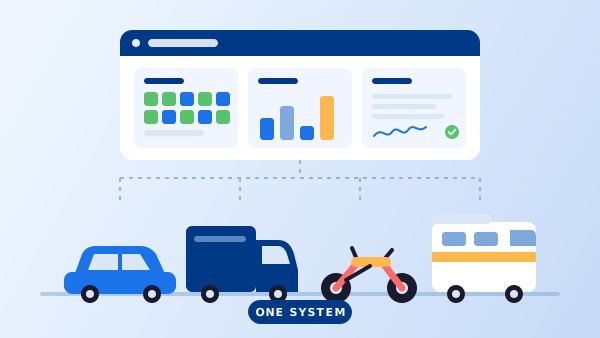
If you also rent cars, boats or RVs, everything sits in the same system. Running a mixed fleet on one system covers how classes, rates and agreements work across vehicle types, and the booking platform page shows how online booking works on the website you already have.
Frequently Asked Questions
At minimum: live availability for each trailer, rates by the day, weekend, week or month, deposits or card holds, a rental agreement signed before the trailer leaves, add-ons such as ball mounts and straps, one-way return fees, and a view of which trailers are out, overdue or due for service. GPS tracking and smart locks are usually separate tools.
Pricing is usually a monthly subscription, a percentage of each booking, or both, plus card processing. Car Rental Solutions is a flat subscription: from $69.95 a month plus a $197 one-time setup fee, or $1,036.40 in the first year. Option B, which adds contracts and e-signatures, is $99.95 a month plus $297, or $1,496.40 in the first year.
Yes. Rates can vary by rental length, season and location, and rate codes can be set for daily, weekly, monthly or weekend rentals. You choose calendar-day or 24-hour-day billing and can set minimum and maximum rental days. There is no mileage to bill on a trailer, so time is the only rate you need.
No. Your staff check the hitch, ball size, wiring and tow rating at pickup. You can write those checks and the renter's responsibility into your agreement, which renters sign on a tablet or phone from Option B, and scan the driver's license at contract. Have your attorney review the wording.
Yes. Car Rental Solutions supports trailers alongside cars, motorcycles, boats, motorhomes, bikes and scooters in one system. Each vehicle class gets its own rates, seasons and rules, and availability stays in one calendar.
No. It does not include GPS hardware, geofencing, a live map or smart locks. It shows each trailer's status, such as on rent, overdue or due for service. If you add a tracker, it runs in its own app, so name each device with the same unit number.