Boat rental software runs the same loop as any rental: a booking, a deposit, a signed agreement, the handover and the return. What changes on the water is the shape of each step. Rentals are often measured in hours, a boat needs fuel and a clean-up before the next renter, and the agreement carries a waiver and safety terms. This guide is for owners of small boat, pontoon and personal watercraft rentals choosing a system. It lists what the software should do, compares the pricing models with a worked example, and says plainly where Car Rental Solutions fits and where it does not.
Short answer: boat rental software should take online bookings against live availability for each boat, collect deposits, get the agreement and waiver signed, sell add-ons and let you block a boat for fuel, cleaning or service. Expect a monthly subscription, a per-booking fee, or both, plus card processing. Car Rental Solutions supports boats alongside cars, from $69.95 a month plus a $197 setup fee ($1,036.40 in the first year), with a 14-day free trial and no credit card. Contracts and e-signatures start with Option B. It has no GPS, marina slip management or weather-hold tools.
What Boat Rental Software Should Include
Use this as a checklist in any demo. The right-hand column is what Car Rental Solutions does today, taken from our features and pricing pages. Where a row says "not a listed feature", it is not something we offer.
| The software should | Why it matters for boats | Car Rental Solutions |
|---|---|---|
| Show live availability for each boat | Two groups at the dock for one pontoon is the worst start to a day | Real-time availability from confirmed reservations and open contracts, and locking a selected unit on a reservation (Option B). Blackout dates on every plan |
| Price short rentals | Many boat rentals are two hours, a half day or a full day | Hourly, daily and custom-block rates, as on our motorcycle and scooter page; calendar-day or 24-hour-day billing; minimum and maximum rental lengths |
| Hold time between rentals | Refuelling and cleaning take time before the next renter | No automatic buffer is listed. You can block a unit for maintenance or place a blackout |
| Take deposits and card holds | A damaged prop or hull costs far more than the rental | Deposits, pre-authorizations and full payments online, with automatic email confirmations |
| Get the agreement and waiver signed | Waiver, safety briefing and fuel policy should be signed before the boat leaves | Editable agreement where you add your own clauses, and e-signature on a tablet or phone (Option B) |
| Check the operator | Age and boater education rules vary by state | Renter age groups and fees; driver's license scanning and a renter database (Option B). A boater education card is checked by your staff, not scanned |
| Sell add-ons | Life jackets in extra sizes, coolers, tubes and fishing gear add revenue | Optional extras chosen at booking, and accessory tracking on contracts (Option B) |
| Charge set fees | Cleaning, refuelling or late-return fees should be on the contract, not in a note | Custom charges as a fixed amount, per day or a percentage, with a minimum and maximum. Fuel is not metered by the gallon |
| Match dock hours and seasons | Docks close at sunset and many waters have a short season | Business hours per location, holiday overrides, high and low seasons by location |
| Handle weather changes | Storms move or cancel bookings at short notice | Staff edit or cancel the reservation, and the agency and customer get an email. No weather holds, text messages or scheduled reminders |
| Track service | Engines and trailers need regular service between rentals | Service-due tracking and maintenance blocks (Option B). Engine hours are not tracked |
| Book on your website | Renters can reserve and pay without calling the dock | Mobile-friendly booking on your site, API access on every plan, and a reservation website in 2, 3 or 6 languages by plan |
Where Boats Differ From Cars
If you already rent cars, most of the setup carries over. Four things need more thought on the water.
What Car Rental Solutions Does Not Do for Boats
Car Rental Solutions is rental software that supports boats in the same system as cars and other vehicles. It is not marina software. If you need any of these, plan on a separate tool:
- Slip, mooring or storage management for boats you do not rent out.
- GPS tracking and geofencing. There is no tracking hardware or live map. The fleet management page explains what the software tracks and what a GPS device adds.
- Weather holds, text messages and scheduled reminders. Emails go to the agency and the customer when a reservation is created, updated or cancelled.
- Inspection checklists with photos, fuel metering and engine-hour billing.
- Captain or crew scheduling for charters.
If your business is mostly bareboat rentals booked direct, that list may not matter. If you run charters with crew, or a marina with slips, a marine-specific system is likely a better fit.
What Boat Rental Software Costs
Boat rental software is usually priced in one of three ways: a flat monthly subscription, a percentage of each booking, or a smaller monthly fee plus a percentage. Card processing is charged on top in every model. Setup fees, text-message charges and extra users are the other costs to ask about.
Car Rental Solutions uses a flat subscription with a one-time setup fee. The last column uses an illustrative $300 full-day boat rental, not a market price, to show how many rentals cover the first year.
| Plan | Monthly | Setup (one time) | First-year cost | $300 rentals to cover it |
|---|---|---|---|---|
| Option A | $69.95 | $197 | $1,036.40 | 4 |
| Option B | $99.95 | $297 | $1,496.40 | 5 |
| Option C | $179.95 | $397 | $2,556.40 | 9 |
Option A is the reservation system: online booking and payments, rates, blackouts, three users and a bilingual reservation website. Most boat fleets will want Option B, which adds contracts, e-signatures, the license scanner, real-time availability and fleet dashboards for up to 125 units and five users. Option C has no limits on locations, units or users and adds a custom website. Plans and pricing can be tailored to your operation.
Flat fee or per-booking fee: a worked example
A per-booking model costs nothing in a quiet month, which suits a short season. A flat fee costs the same however busy you are. The table compares an illustrative 4% booking fee with Option B's first year. The 4% is an example, not a quote from any vendor, and card processing is left out of both columns because you pay it either way.
| Online bookings in a year | At an illustrative 4% fee | Option B, first year | Difference |
|---|---|---|---|
| $20,000 | $800 | $1,496.40 | Per-booking costs $696.40 less |
| $50,000 | $2,000 | $1,496.40 | Flat fee costs $503.60 less |
| $100,000 | $4,000 | $1,496.40 | Flat fee costs $2,503.60 less |
At 4%, the two cost the same at $37,410 of online bookings a year ($1,496.40 ÷ 0.04). From the second year the flat fee drops to $1,199.40, because the setup fee is paid once. Run the same sum with your own season's bookings and the real fee from each quote.
Setting Up a Boat Fleet in Five Steps
- 1
Create classes and units
Make a class for each kind of boat, such as pontoons, fishing boats and personal watercraft, and add each boat as a unit with its own number.
- 2
Add docks as locations
Set each dock's opening hours, holiday hours and pickup rules, and decide which boats are offered at which dock.
- 3
Build rates and seasons
Enter your hour, half-day and full-day prices, high and low seasons, minimum rental lengths and renter age groups.
- 4
Set extras, fees and the agreement
Add extras such as coolers and tubes, a refuel or cleaning fee as a custom charge, and your waiver and safety clauses to the agreement.
- 5
Test a booking end to end
Book one rental per class on your website, take the deposit, sign the agreement and close it, then compare the total with what you charge today.
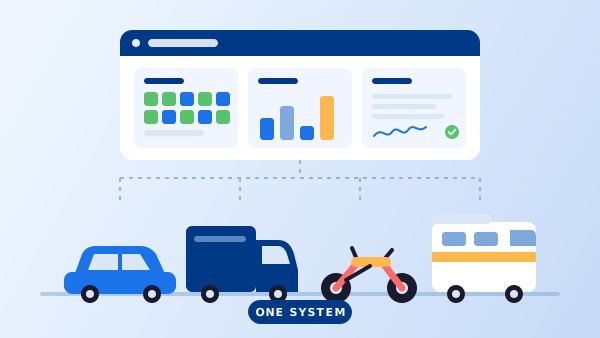
If you also rent cars, RVs or motorcycles, everything sits in the same system. Running a mixed fleet on one system covers how classes, rates and agreements work across vehicle types, and the booking platform page shows how online booking works on the website you already have.
Frequently Asked Questions
At minimum: online booking against live availability for each boat, deposits or card holds, a rental agreement with your waiver terms signed before the boat leaves, paid add-ons such as life jackets or coolers, dock hours by location, and a way to block a boat for fuel, cleaning or service. Some operators also add GPS, text messaging or marina slip management as separate tools.
Pricing is usually a monthly subscription, a percentage of each booking, or both, plus card processing. Car Rental Solutions is a flat subscription: from $69.95 a month plus a $197 one-time setup fee, or $1,036.40 in the first year. Option B, which adds contracts and e-signatures, is $99.95 a month plus $297, or $1,496.40 in the first year.
Yes. Rates can be set by the hour, the day or a custom block, the same setup our motorcycle and scooter page describes for short rentals. You can also choose calendar-day or 24-hour-day billing for longer rentals and set minimum and maximum rental lengths.
Yes, from Option B. You edit the agreement yourself, so your waiver, safety briefing and fuel policy can be clauses in it, and renters sign on a tablet or phone at the dock. The signed agreement can be emailed or printed. Have your attorney review the waiver wording.
Yes. Car Rental Solutions supports boats alongside cars, motorcycles, RVs, trailers, bikes and scooters in one system. Each vehicle class gets its own rates, seasons and rules, and availability stays in one calendar.
No. It does not include GPS hardware, geofencing or a live map. It shows each boat's status, such as on rent, overdue or due for service. If you add a tracker, it runs in its own app, so name each device with the same unit number.