Two Terms, Two Very Different Businesses
"Vehicle leasing software" and "car rental software" get used interchangeably — by vendors, by comparison sites, and by fleet owners searching for a system. But the two categories automate opposite business models, and buying the wrong one means paying for a platform whose core features you'll never open.
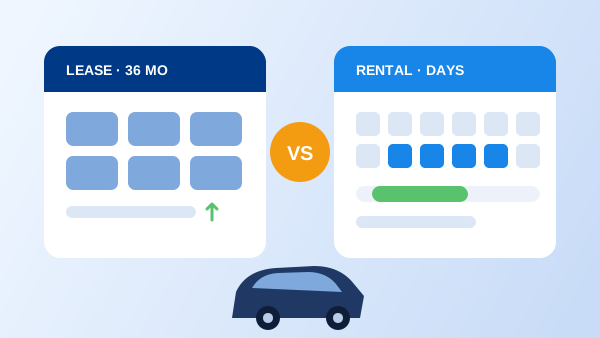
The difference comes down to time and volume. A lease is a small number of long contracts: one customer, one car, three years, thirty-six identical invoices. A rental is a large number of short transactions: hundreds of customers a season, cars changing hands every few days, prices that move with demand. The software each business needs follows directly from that shape.
What Vehicle Leasing Software Manages
Leasing software is contract and asset administration. Its user is a finance-minded fleet lessor, and its screens are about the life of an agreement, not the life of a booking day:
- Recurring billing — generating the same monthly invoice reliably for 24, 36, or 48 months, with escalations and late-fee handling.
- Residual value and depreciation — tracking what each vehicle will be worth at contract end, because that number is the lessor's actual profit margin.
- Mileage allowances — recording contracted kilometers per year and calculating excess-mileage charges at term end.
- Maintenance over the contract life — scheduled services, warranty tracking, and cost-per-vehicle reporting across years.
- End-of-term workflow — return inspections, settlement, buyout offers, and remarketing the used vehicle.
Notice what's absent: there is no availability calendar, no booking engine, no daily rate logic. A leased car is off the market for years — there is nothing to "book."
What Car Rental Software Manages
Rental software is built for velocity. The same car earns money from dozens of customers a year, which means the system's job is keeping it visible, priced, and moving:
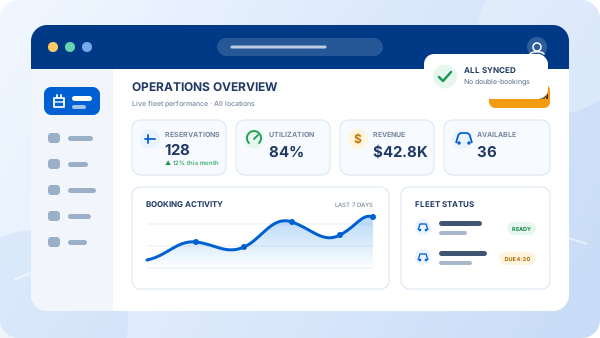
- Real-time availability — one calendar across your website, counter, and phone, so a car can't be promised twice.
- An online booking engine — the reservation system takes paid bookings from your website around the clock.
- Rate management — daily and weekly prices, seasonal adjustments, and length-of-rental discounts applied automatically to every quote.
- Counter operations — fast check-in/check-out, e-signed contracts, damage inspections at every handover.
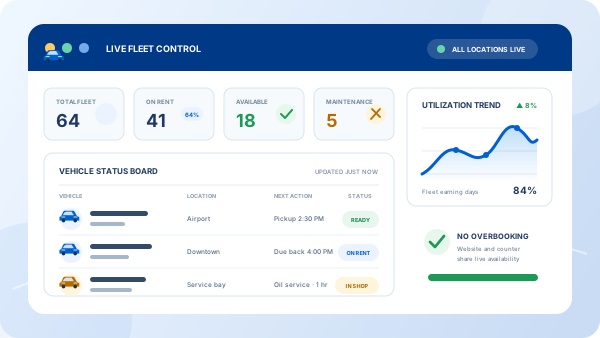
- Fleet status — which cars are on rent, due back, in cleaning, or in the workshop today, tracked in fleet management alongside maintenance and documents.
"A lease is one contract that lasts years. A rental is a car that must be sold again every few days. The software follows the money."
Where the Two Models Meet
The categories blur in the middle: monthly rentals, corporate accounts, and subscription-style agreements. A three-month contract for a construction company looks a little like a lease — recurring billing, one customer, low churn — but operationally it's still a rental: the car comes back soon, gets inspected, and re-enters the available fleet at daily rates.
Modern rental platforms handle this middle ground natively. Long-term pricing tiers bill by the month, the rental agreement renews without re-signing from scratch, and the vehicle never leaves your fleet dashboard. What rental software deliberately doesn't do is finance-lease accounting — residual values, balloon payments, lease-end buyouts. If those words describe your revenue, you're a lessor and you need a leasing platform.
There's also a practical revenue reason operators like this middle ground: monthly agreements smooth out seasonality. A handful of corporate cars on 3-to-6-month terms keeps baseline income flowing through low season, while the rest of the fleet chases high-season daily rates. Managing both patterns from one availability calendar — instead of one system per contract type — is exactly the flexibility a leasing platform can't offer in the other direction.
How to Tell Which One You Need in 5 Steps
-
1
Classify your revenue by contract length
List last year's income by agreement duration. Mostly days-to-months: you're a rental business. Mostly 12+ month contracts with fixed monthly payments: you're a lessor.
-
2
Ask where your next customer comes from
If the answer is "my website, tonight, while I sleep," you need a booking engine — a rental-software feature leasing tools simply don't have.
-
3
Check which numbers you manage weekly
Utilization, daily rates, and upcoming reservations point to rental software. Depreciation curves, residual values, and end-of-term settlements point to leasing software.
-
4
Count your handovers
Ten or more vehicle handovers a week means check-in/check-out speed, inspections, and e-signatures drive your workload — rental territory. A handful a year means contract admin dominates — leasing territory.
-
5
Test your real workflow before deciding
Load your fleet and a typical week of agreements into a trial. If the system handles your daily routine without workarounds, it's the right category; if you're fighting it, you picked the wrong model.
Why Rental Operators Shouldn't Buy Leasing Tools
You'd pay for accounting you don't do
Residual-value modules and lease-end settlement workflows are the expensive heart of leasing platforms — and dead weight for a business whose cars return every week.
You'd lose the booking engine
No leasing tool sells your Tuesday availability to a traveler at midnight. For an operator, the booking engine isn't a feature — it's the revenue channel.
Your counter would slow down
Leasing systems assume a contract signing is a quarterly event, not a Saturday-morning queue. Rental check-in flows are measured in minutes because they have to be.
Long-term deals fit fine in rental software
Monthly billing, corporate accounts, and extended agreements are standard rental workflows — you keep one system, one fleet view, and one customer database while serving both kinds of demand.
Your reporting would answer the wrong questions
Leasing dashboards report contract profitability over years; a rental operator needs to know this week's utilization, this month's revenue per car, and which vehicle class sells out first. The wrong software doesn't just slow you down — it hides the numbers your decisions depend on.
The Takeaway
Vehicle leasing software administers long contracts and asset finance; car rental software sells and operates short-cycle fleet capacity. The overlap — monthly and corporate rentals — is comfortably covered by a capable rental platform with long-term pricing and recurring billing. Classify your revenue by contract length, and the choice usually makes itself: if your cars come back, you're a rental business, and your software should be built for bookings.
Frequently Asked Questions
Vehicle leasing software manages long-term vehicle contracts — typically 12 to 48 months. Its core jobs are contract and asset administration: recurring monthly invoicing, residual value and depreciation tracking, mileage allowances, maintenance schedules over the contract life, and end-of-term processes like inspections and buyout options. It is built around a small number of long contracts rather than a high volume of short transactions.
Rental software is built for velocity: real-time availability calendars, an online booking engine on your website, daily and weekly rate rules with seasonal pricing, quick check-in and check-out at the counter, e-signed short-term contracts, and damage inspections at every handover. Leasing tools have none of this because a lease doesn't need it — there's no daily availability to sell and no walk-up customer at a counter.
Yes. Monthly and long-term rentals are a standard rental workflow: the platform applies length-of-rental pricing, schedules recurring billing, and keeps the vehicle visible in fleet management throughout. Many operators run 1-to-12-month corporate and subscription-style agreements entirely inside their rental system. What rental software does not replace is true finance leasing — residual-value accounting and lease-end buyouts belong to leasing platforms.
If your revenue comes from bookings measured in days, weeks, or months, choose rental software and run your long-term agreements as extended rentals with monthly billing. A separate leasing platform only becomes worth its cost when you hold contracts of a year or more where depreciation, residual value, and end-of-term settlement — not availability and bookings — are the numbers that matter.
Some enterprise fleet suites claim both, but they are priced and structured for leasing companies, and their rental side is usually thin — weak booking engines and limited rate logic. Most businesses are better served by the tool that matches their dominant revenue model, using its flexibility to cover the edge cases: rental software with long-term billing for operators, leasing software with occasional short-term add-ons for lessors.