
Software & Technology
What Is a Booking Engine? A Plain-English Guide for Rental Operators
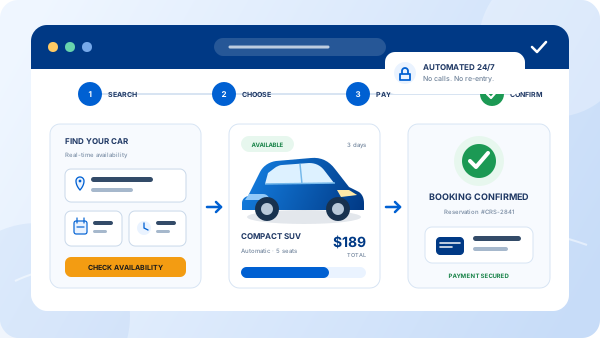
"Booking engine" gets thrown around by every software vendor, yet few explain it. Here's the plain-English version: a booking engine is the part of your website that lets a customer search availability, see a price, and confirm a paid reservation—without calling you. If your site only has a contact form, you don't have a booking engine. You have a lead form, and leads leak.
The definition, without jargon
A booking engine is software embedded in your website that does four things in sequence: checks which vehicles are actually available for the requested dates, calculates the exact price (including season, extras, and fees), collects payment or deposit, and writes the confirmed reservation into your management system. The magic isn't any single step—it's that no human touches any of them.
Booking engine vs. booking widget vs. OTA
Booking widget
A widget is a form that collects a request and emails it to you. The customer waits, you type the reservation manually, and availability is a guess. It looks like online booking; it isn't.
OTA or broker listing
Online travel agencies bring you demand, but they own the customer relationship and charge commission—commonly 15–25% per booking. Useful for reach; expensive as your only channel.
A real booking engine
Live availability, instant accurate pricing, immediate confirmation, zero commission—on your own domain, under your own brand. Direct bookings are the highest-margin reservations you'll ever take. This is the core of a proper car rental reservation system.
How a booking engine works, step by step
- Search. The customer picks dates, times, and locations on your website.
- Availability check. The engine queries your live fleet data—vehicles on rent, reserved, or in maintenance are excluded automatically.
- Pricing. The rate engine applies seasons, day/week/month tiers, extras, and fees to produce a real total, not an estimate.
- Checkout. The customer selects extras, pays or leaves a deposit, and gets instant confirmation.
- Back office. The reservation appears in your control panel, ready to become a signed rental agreement at pickup.
Put a real booking engine on your website
Real-time availability, automatic rental pricing, online payments, and multilingual checkout—integrated with your fleet and contracts.
See the reservation system Book a free demoWhat a good car rental booking engine must handle
Rental pricing is harder than hotel pricing, so generic engines fail quietly. Yours must handle seasonal and tiered rates (including rentals spanning two seasons), driver age rules and surcharges, one-way fees between locations, extras and insurance upsells, deposits and pre-authorizations, and multiple languages and currencies if you serve travelers—ideally through a multilingual booking website.
The takeaway
A booking engine turns your website from a brochure into your best-performing sales channel: always open, always accurate, commission-free. If you're still quoting by phone and email, the fastest revenue upgrade available to your agency is making your site bookable. For the bigger picture, read our explainer on what a car rental reservation system is.
A booking engine handles the sale. Everything after it — the agreement, the vehicle assignment, the return — belongs to the wider car rental software the engine feeds.
Booking engine FAQs
Is a booking engine the same as a reservation system?
They overlap but aren't identical. The booking engine is the customer-facing part that searches, prices, and confirms. A reservation system is the full package: the booking engine plus the back-office control panel where staff manage reservations, rates, and the fleet.
Can I add a booking engine to my existing website?
Yes. A good booking engine integrates into your current site, keeping your branding and domain. If your site is outdated, some providers, including Car Rental Solutions, build the website and booking engine together.
Do booking engines handle payments and deposits?
Modern booking engines take card payments, deposits, and pre-authorizations at the time of booking, which significantly reduces no-shows.
What does a booking engine cost compared to OTA commissions?
OTAs and brokers typically charge commission on every booking, often in the 15–25% range. A booking engine on your own website is usually a fixed subscription, so direct bookings keep that margin in your pocket. Most agencies aim for a healthy mix, using their own engine to grow the direct share.